

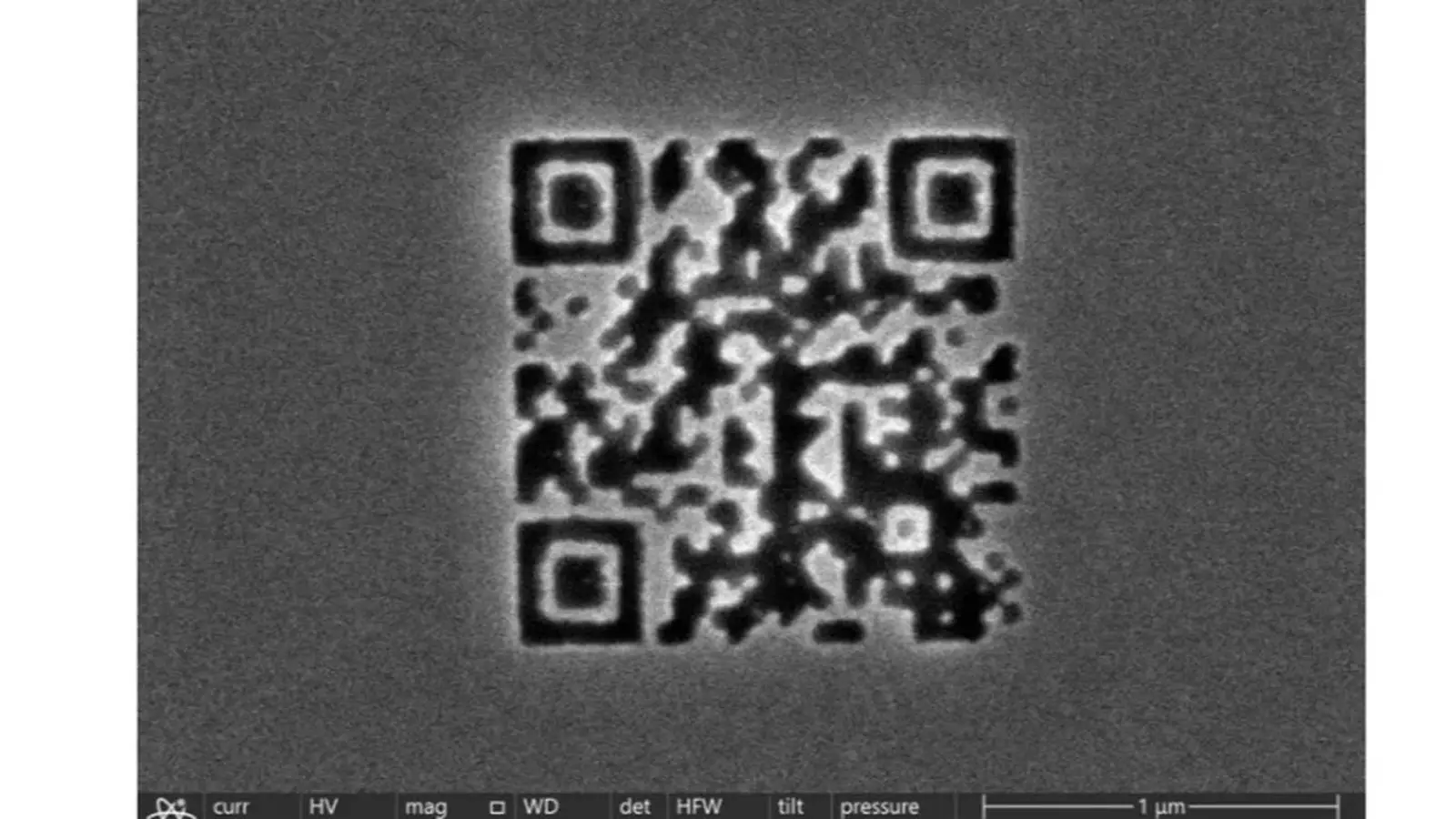
A team of researchers from Vienna University of Technology, in collaboration with the startup Cerabyte, has set a world record by creating the smallest QR code in history. With an area of just 1.98 square micrometers, it's smaller than most known bacteria. The achievement has been officially recorded in the Guinness Book of World Records and is 37% smaller than the previous record.
This new QR code is invisible to the naked eye and requires an electron microscope to be read. It consists of a 29×29 element matrix, where each element is only a few tens of nanometers wide—smaller than the wavelength of visible light. This scale demonstrates just how far information encoding technology has advanced.
To create the structure, the researchers used a focused ion beam method to apply the image to an ultra-thin ceramic film. The choice of ceramic is deliberate: this material is resistant to high temperatures, moisture, radiation, and time, making it an ideal foundation for long-term data storage.
The scientists explained that the project's goal extends far beyond just setting a record. This technology could form the basis for entirely new types of data storage devices capable of preserving information for hundreds or even thousands of years without requiring electricity, cooling, or maintenance. Such storage media could be used for archives, scientific and cultural data, as well as critical information where reliability and longevity are more important than access speed.