
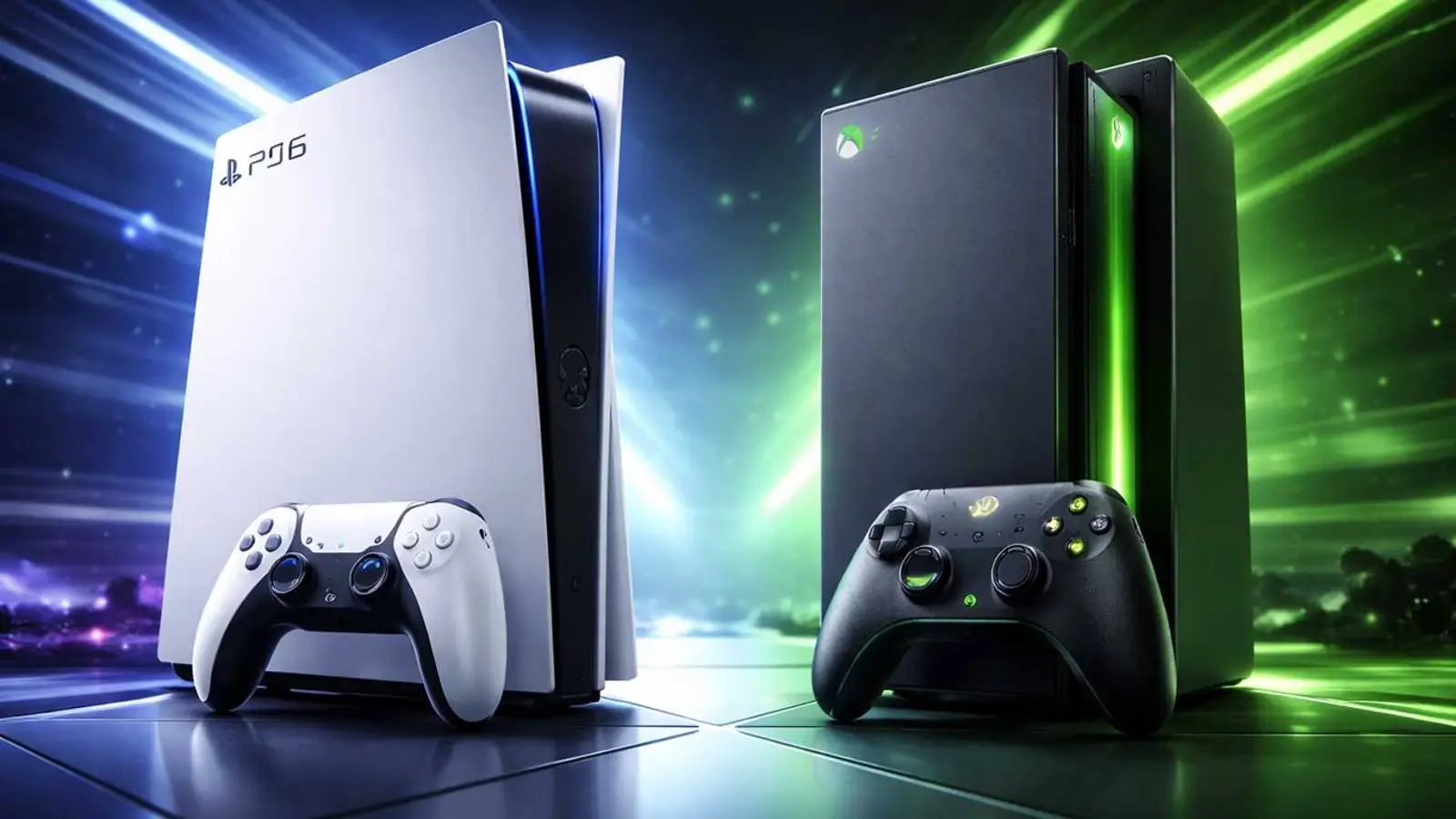
While Sony and Microsoft have not officially revealed the PlayStation 6 and Xbox Project Helix, leaks are already giving us a glimpse of what these next-gen consoles might offer. According to preliminary data, Microsoft's system is expected to be more powerful, but experts believe this advantage is unlikely to be decisive.
Analysts from Digital Foundry noted in a recent podcast episode that the performance difference won't provide a significant edge and essentially won't be that meaningful. They argue that even if the Xbox proves more powerful on paper, it's unlikely to translate into a dramatic gap in actual gameplay.
Well-known insider Kepler_L2 on the NeoGAF forum clarified that the gap between the PS6 and Project Helix will be larger than the one between the PlayStation 5 and Xbox Series X. According to this source, the APU Magnus chip in Project Helix will deliver about 25% more computational power in TFlops, a 33% higher throughput for the frontend, geometry, and pixel blocks, 140% more last-level cache, and 20% higher memory bandwidth.
However, even the insider agrees with Digital Foundry's assessment: this level of advantage isn't enough to create a stark contrast, such as one console running a game at a stable 60 FPS while the other only manages 30 FPS. The difference will likely manifest in slightly higher internal resolutions or marginally improved graphics settings. With the active use of upscaling technologies like future versions of PSSR and AMD FSR Diamond, the distinctions may become nearly invisible to most players.
Experts also point out that price will be a key factor for success. Digital Foundry believes the Magnus chip in the Xbox will exceed 400 mm² in size, increasing production costs. Meanwhile, the PS6 is expected to feature a more compact monolithic die, similar in size to the PS5 Pro, which could potentially make it cheaper to produce. If Project Helix ends up significantly more expensive without a noticeable performance advantage, it could shift the balance in the market.
Both consoles are still targeting a 2027 release. Although the current information is based on preliminary data and analysis, more concrete details about the next generation of gaming systems should emerge in the coming years.