
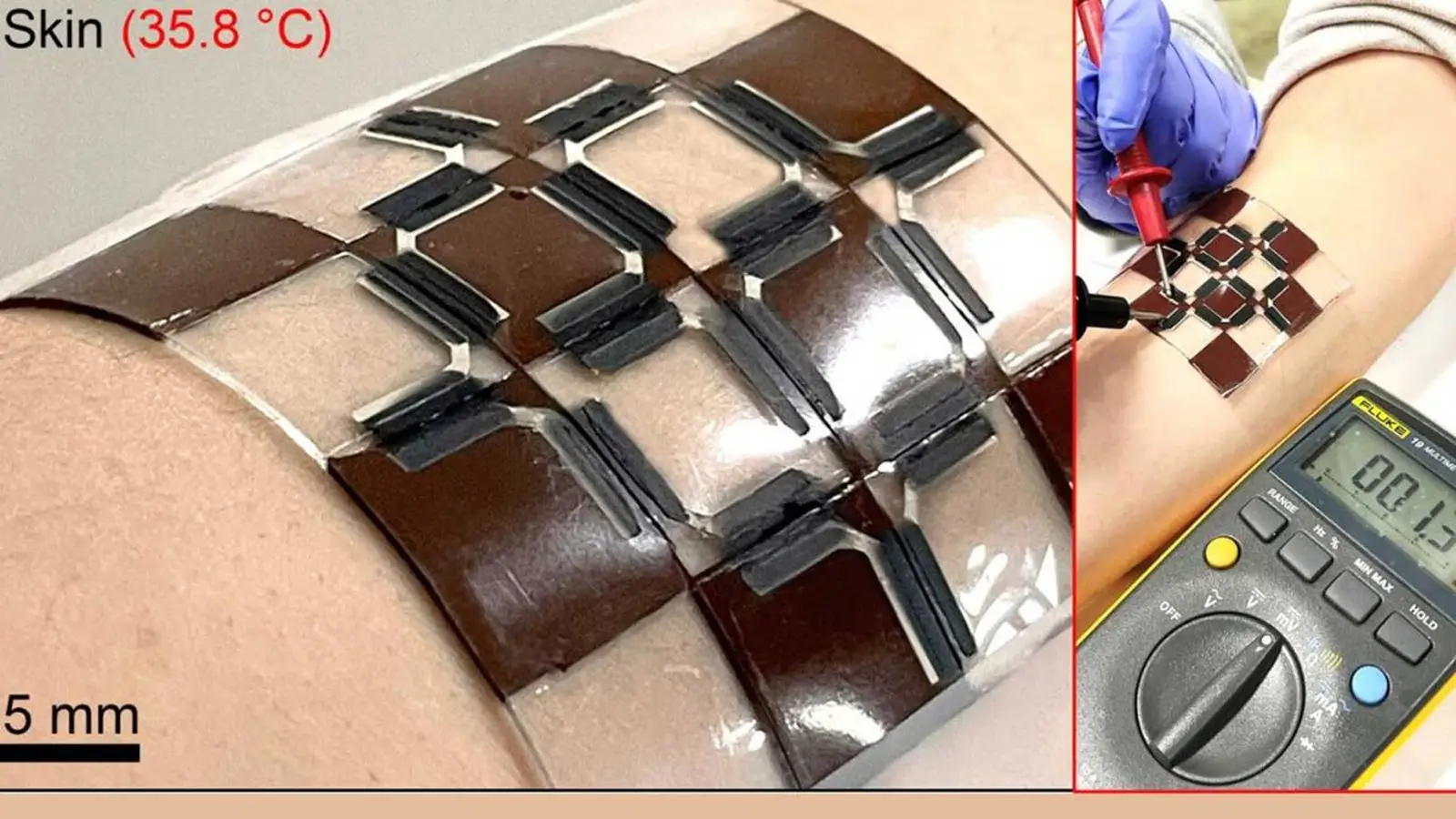
Scientists from Seoul National University have unveiled a technology that could fundamentally transform the wearable electronics market. They have successfully created a thin, flexible power source that generates electricity from human body heat, paving the way for battery-free devices.
The innovation is based on thermoelectric generators, which convert temperature differences into electricity. The main challenge with such systems in thin films was that heat simply dissipated upward, failing to create the necessary temperature gradient. Previously, engineers addressed this with complex, multi-layered or bulky structures, but this made devices less convenient and flexible.
The new technology takes a fundamentally different approach. Researchers developed an elastic silicone base embedded with copper nanoparticles distributed in specific zones. This structure forces heat to move laterally rather than vertically, creating areas with different temperatures on the surface. This establishes the required gradient without increasing device thickness, effectively mimicking complex physical effects in a flat form.
An additional advantage is the simplicity of production: the device is created using ink-based printing technology, making it scalable and suitable for various form factors. This development could form the foundation for smart clothing, medical sensors, and other wearable gadgets that operate autonomously using only body heat.