
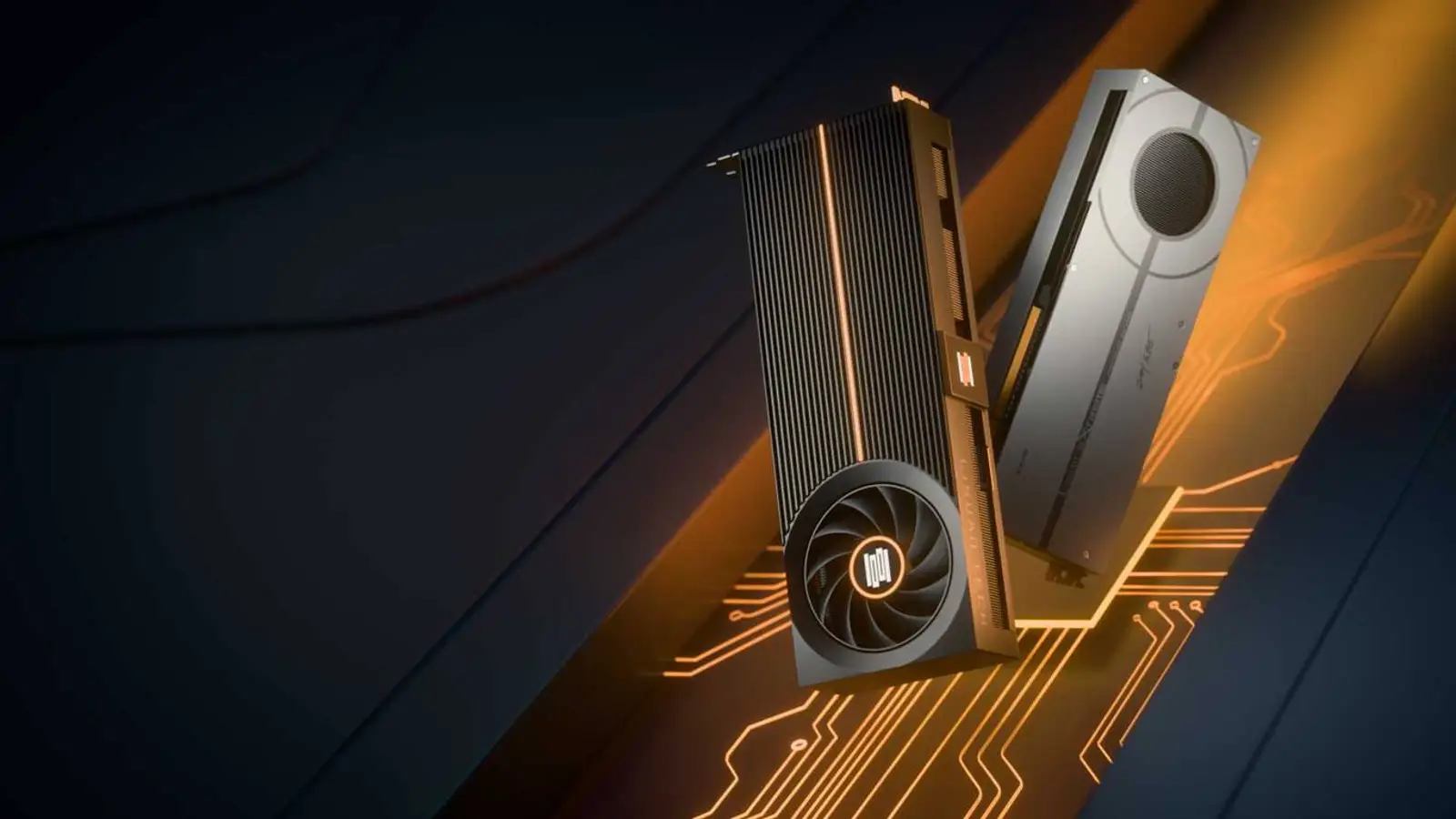
Chinese graphics card maker Lisuan has put its first consumer GPU, the LX 7G100, through a real gaming test, and the results are mixed. On one hand, it's a rare example of a Chinese GPU that can run many modern games right out of the box. On the other hand, in terms of real-world performance and price, it doesn't yet pose a threat to established options from NVIDIA, AMD, or Intel.
The review comes from Chaowanke, who tested the Founder Edition with 12 GB of memory based on Lisuan's own TrueGPU architecture. For a new player in the market, this is a noteworthy achievement: unlike some earlier Chinese GPUs, the LX 7G100 works with a large number of current titles, including DirectX 12 games. In that sense, Lisuan's launch looks stronger than Moore Threads MTT S80, which needed months of driver updates to improve compatibility.
Benchmarks and real games tell different stories, however. In synthetic tests like 3DMark, the LX 7G100 sometimes comes close to the GeForce RTX 3060 or even looks decent against the RTX 4060, but in actual gaming, the gap becomes clear. In Cyberpunk 2077 at 1080p with FSR3 Quality and frame generation, the card managed 88 FPS, while the RTX 4060 hit 232 FPS and the Intel Arc B580 reached 243 FPS. In Black Myth: Wukong, the result was 56 FPS versus 115 FPS for the RTX 4060, and in Forza Horizon 5, the Lisuan card managed only 48 FPS.
The main issue for the LX 7G100 isn't just performance—it's also the expected price of around 3,300 yuan, or roughly $480. For that money, buyers can consider RTX 4060-class cards, used RTX 30-series models, or Intel Arc solutions, which are often noticeably faster and more stable in games. So as it stands, the LX 7G100 is more of a demonstration of technological progress in the Chinese GPU industry than a ready-to-buy mass-market product for gamers.
There are also software limitations. According to the review, the driver control panel has almost no useful settings, the overclocking mode on the Founder Edition resets after a reboot, MSI Afterburner monitoring only shows basic GPU and memory load, and the card lacks ray tracing support. Lisuan reportedly plans to add ray tracing only in its second-generation GPUs.
Ultimately, the LX 7G100 cannot be called an alternative to the GeForce RTX 4060, and its gaming results don't even match the RTX 3060. But as Lisuan's first consumer GPU with broad support for modern games at launch, it's a notable step forward. If the company can speed up its drivers, improve management tools, and reconsider the price, its future graphics cards stand a better chance of moving beyond a mere technology demo.