
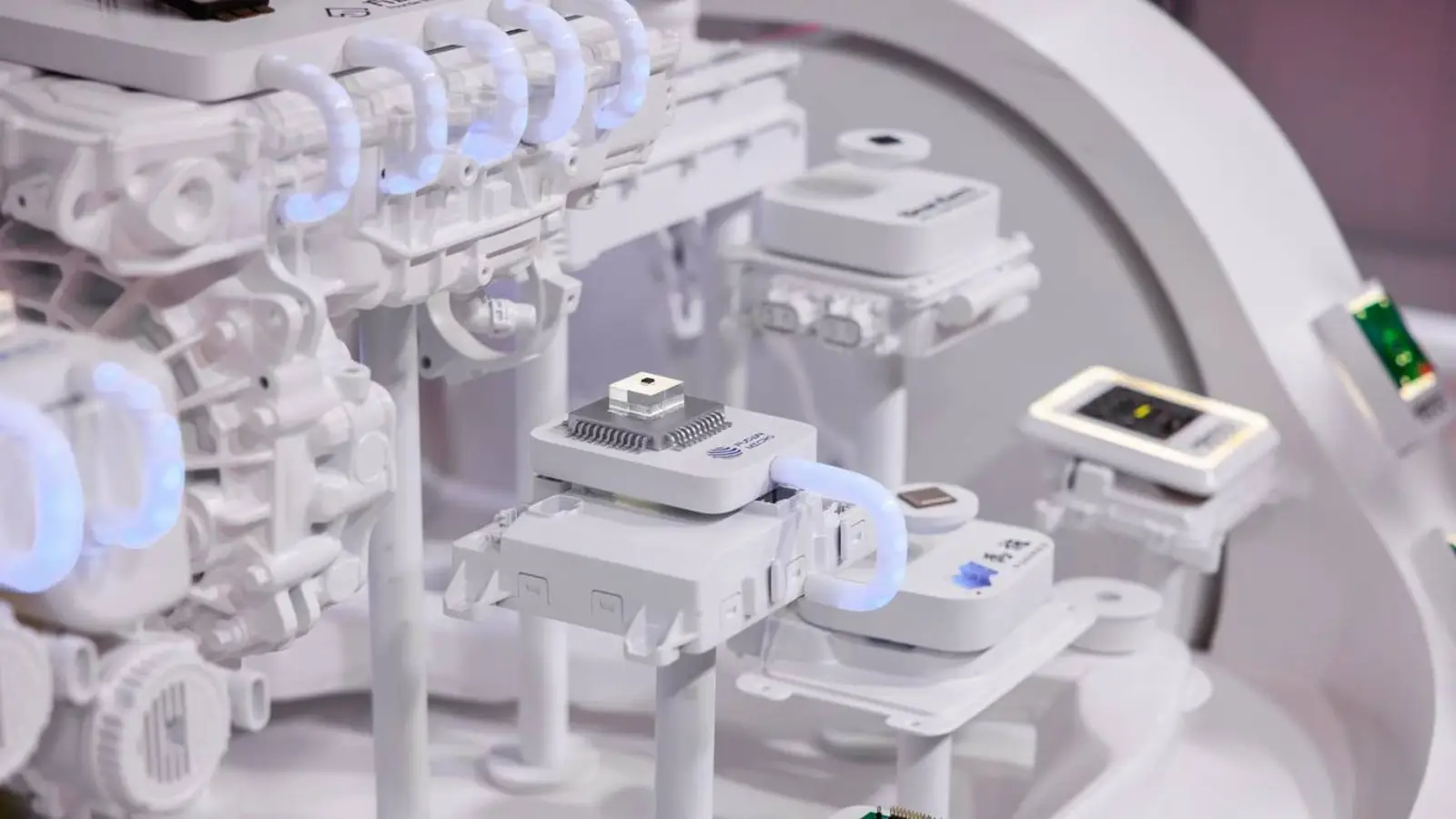
At Computex, NVIDIA unveiled the RTX Spark, a new system-on-chip for Windows laptops and compact desktops. The platform is the company's answer to the AMD Ryzen AI Max and Qualcomm Snapdragon X2, but with a stronger focus on graphics and local AI tasks. Essentially, it's a consumer Windows version of the DGX Spark concept, designed for the broader PC market rather than a Linux developer environment.
The RTX Spark packs 6,144 Blackwell RTX graphics cores, 20 ARM CPU cores from MediaTek, and a dedicated NPU that meets Copilot+ PC requirements. NVIDIA claims up to 1 petaflop of performance, emphasizing the tensor cores of the Blackwell graphics block over the NPU. The company compares its graphics capability to the mobile RTX 5070, but promises much more flexible power consumption, ranging from single-digit watts to 80W.
Unified memory is a key feature. The GPU can directly access a shared pool of 16GB to 128GB, crucial for running local AI models and heavy creative tasks. NVIDIA doesn't plan to pair these systems with discrete graphics cards; the RTX Spark is a standalone platform where CPU, GPU, NPU, and memory work in a unified architecture.
The first devices will include laptops like the Microsoft Surface Laptop Ultra and Dell XPS 16, with major OEMs expected to follow. According to NVIDIA, Microsoft has been involved in development for several years, and Windows 11 is already being optimized for the new chip. The task scheduler, for instance, will better distribute workloads between CPU and AI components, handling everything from email to local code debugging agents.
Compatibility is also a priority for Windows on Arm. NVIDIA is familiar with the Prism emulation layer for legacy apps and is working with major anti-cheat providers. This could help avoid the issues early Snapdragon Copilot+ PCs had, where some popular games were blocked by anti-cheat software.
Jensen Huang presents the RTX Spark as a step toward rethinking the personal computer. He stated that PCs should gradually become devices for AI agents, not just manual input tools. If NVIDIA can combine performance, Windows compatibility, and acceptable battery life, the RTX Spark could be the company's most significant return to the consumer SoC market since the Tegra era.