
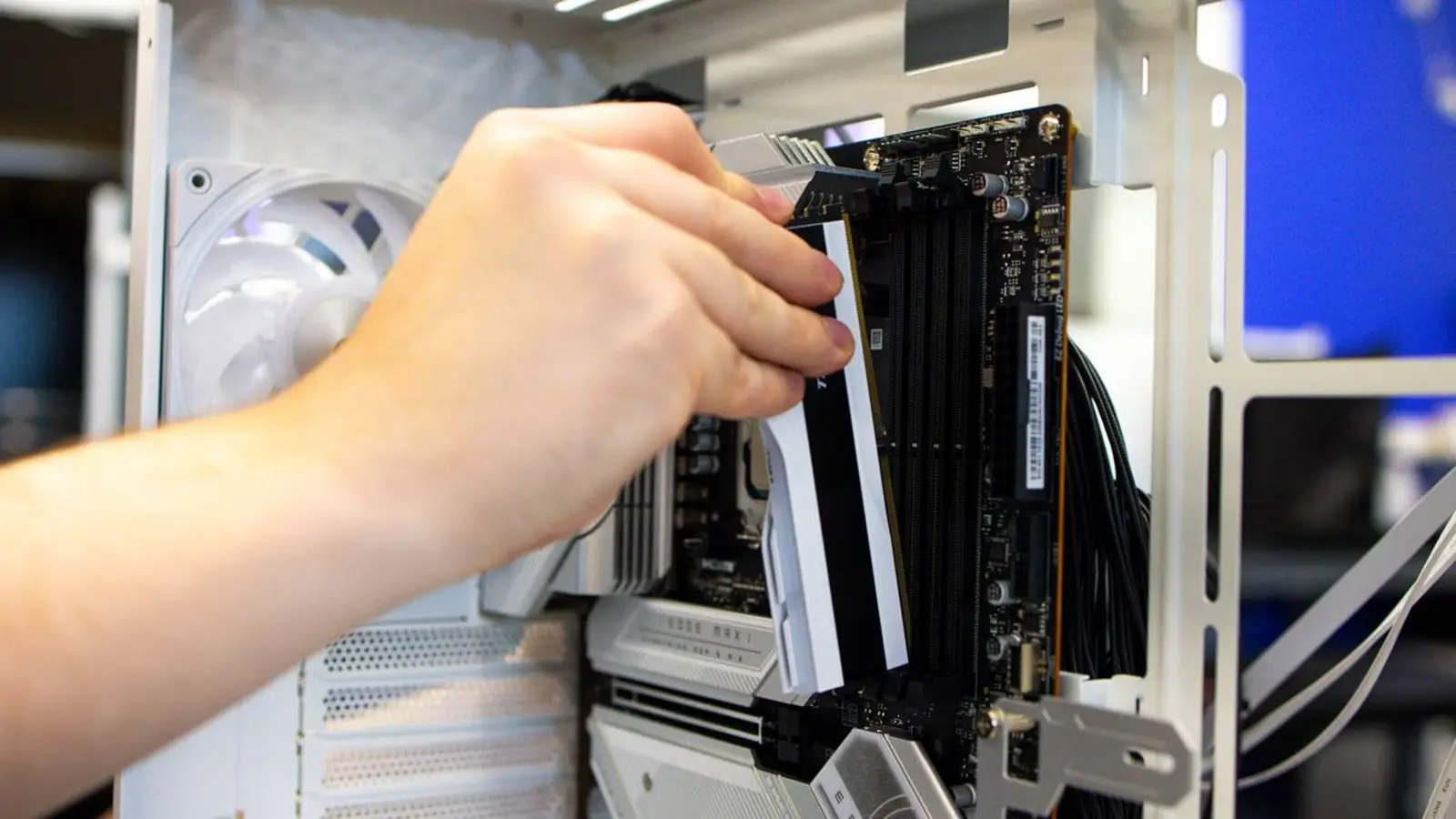
AMD used Computex 2026 to share more details about its new EXPO Ultra Low Latency technology, also called EXPO ULL. This is an evolution of the company's proprietary EXPO memory profiles, designed to cut DDR5 latencies and deliver extra gaming performance without jumping to higher frequencies.
David McAfee, AMD's Vice President and head of Ryzen and Radeon, told Tom's Hardware that EXPO ULL adds extra settings for secondary and tertiary timings to the SPD profile. In essence, it tunes the memory more aggressively, squeezing out more performance by lowering latencies. The technology is compatible with existing chipsets and motherboards, though AMD still recommends a BIOS update.
Based on AMD's internal testing using a Ryzen 7 9700X system across more than 30 games, DDR5-6000 memory with EXPO ULL at the same frequency averaged 4% higher FPS compared to standard EXPO DDR5-6000. Against JEDEC DDR5-5600, the gain reached 13%. The 1% low metric, which reflects smoothness and frame drops, also improved by 4% over regular EXPO and by up to 15% over standard JEDEC memory.
Pricing is a key consideration. McAfee stressed that AMD doesn't directly control module prices, but its partners expect to sell EXPO ULL kits at roughly the same cost as current memory sets. Since the new technology doesn't require fundamentally different hardware—only broader timing adjustments—there's no reason for a significant price hike.
AMD hasn't revealed when the first EXPO ULL modules will hit the market, only saying they'll arrive "soon." Support has already been confirmed by G.Skill, Kingston, Lexar, ADATA XPG, TeamGroup, Apacer, Klevv, Origin Code, and others. If AMD's claims hold up, EXPO ULL could be an easy way to boost gaming FPS on Ryzen systems without investing in extremely expensive memory.