
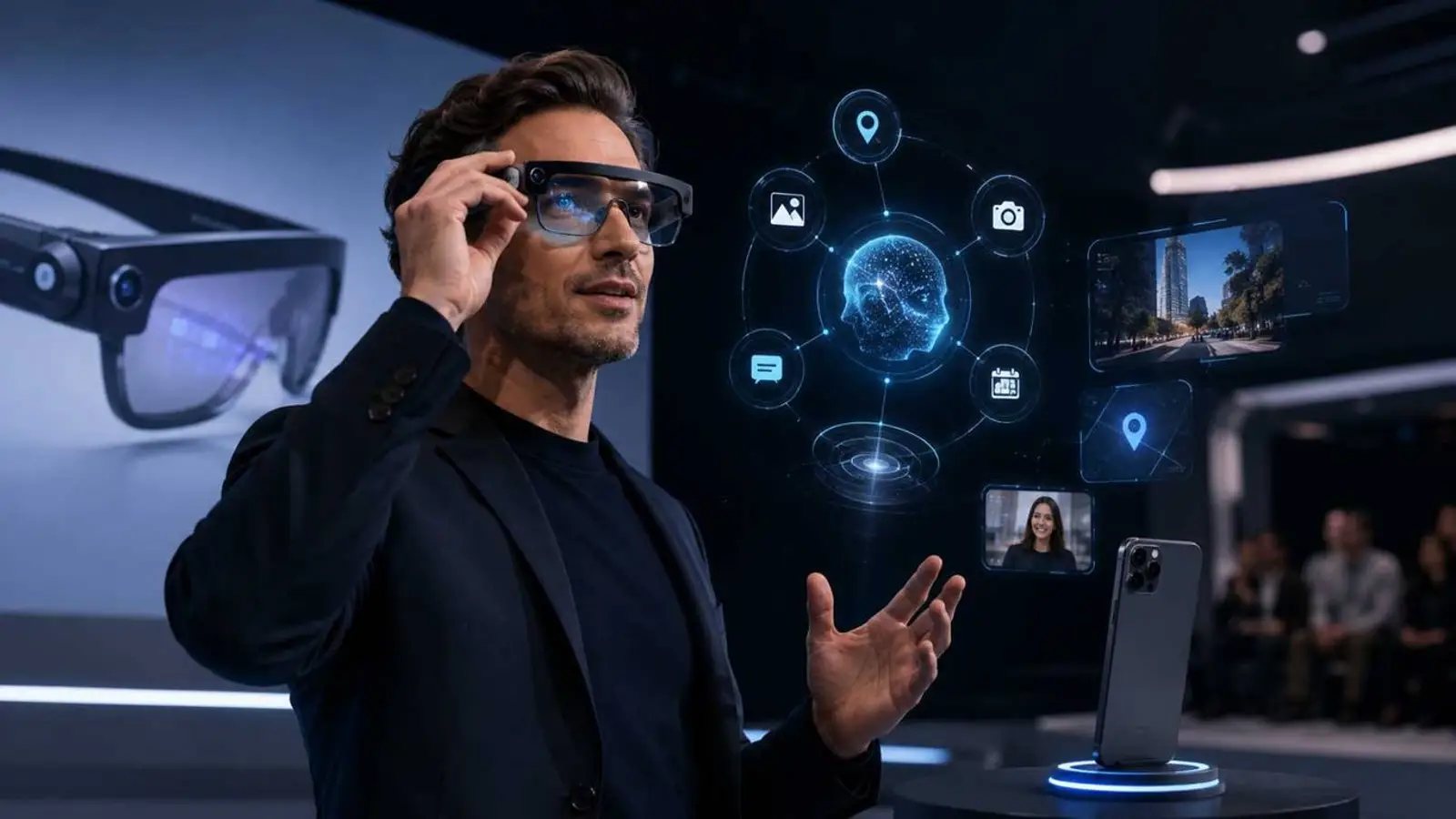
Qualcomm CEO Cristiano Amon believes that AI agents will change the familiar way people use apps and electronic devices. In his view, users will increasingly avoid opening services manually on a smartphone: they will simply describe a task to a digital assistant, which will connect the right apps, perform the necessary actions and return the result.
As an example, Amon pointed to a simple restaurant booking scenario. Instead of taking out a smartphone, looking for a suitable place, opening a reservation service, paying for the order and checking email, the user could just tell the assistant what they need. The AI agent would link the booking, payment and email apps, place the reservation and send the confirmation. Apps would not disappear, but their role would change noticeably: the agent would become the main new interface between people and services.
Qualcomm sees smart glasses with a camera and display as one of the key devices for this model. Amon believes future smartphones and new wearable gadgets will be designed around AI agents. The company is already involved in more than 40 projects for such devices, including smart jewelry, camera-equipped earbuds, intelligent brooches and watches. The basic idea is for these gadgets to stay close to the user, accompany them constantly, see the surrounding world and make it possible to call on an assistant at any moment.
Among all the new form factors, Amon currently puts the most faith in smart glasses. According to his forecast, this market could eventually grow to the scale of smartphones. For comparison, global smartphone shipments reached about 1.26 billion units in 2025, so this is not a niche category, but a potentially huge direction for the entire industry.
For Qualcomm, this could become the next major market after smartphones: the company’s chips are already used in many consumer devices, and the wave of AI gadgets could significantly expand that business. No prices were mentioned in the original material.