
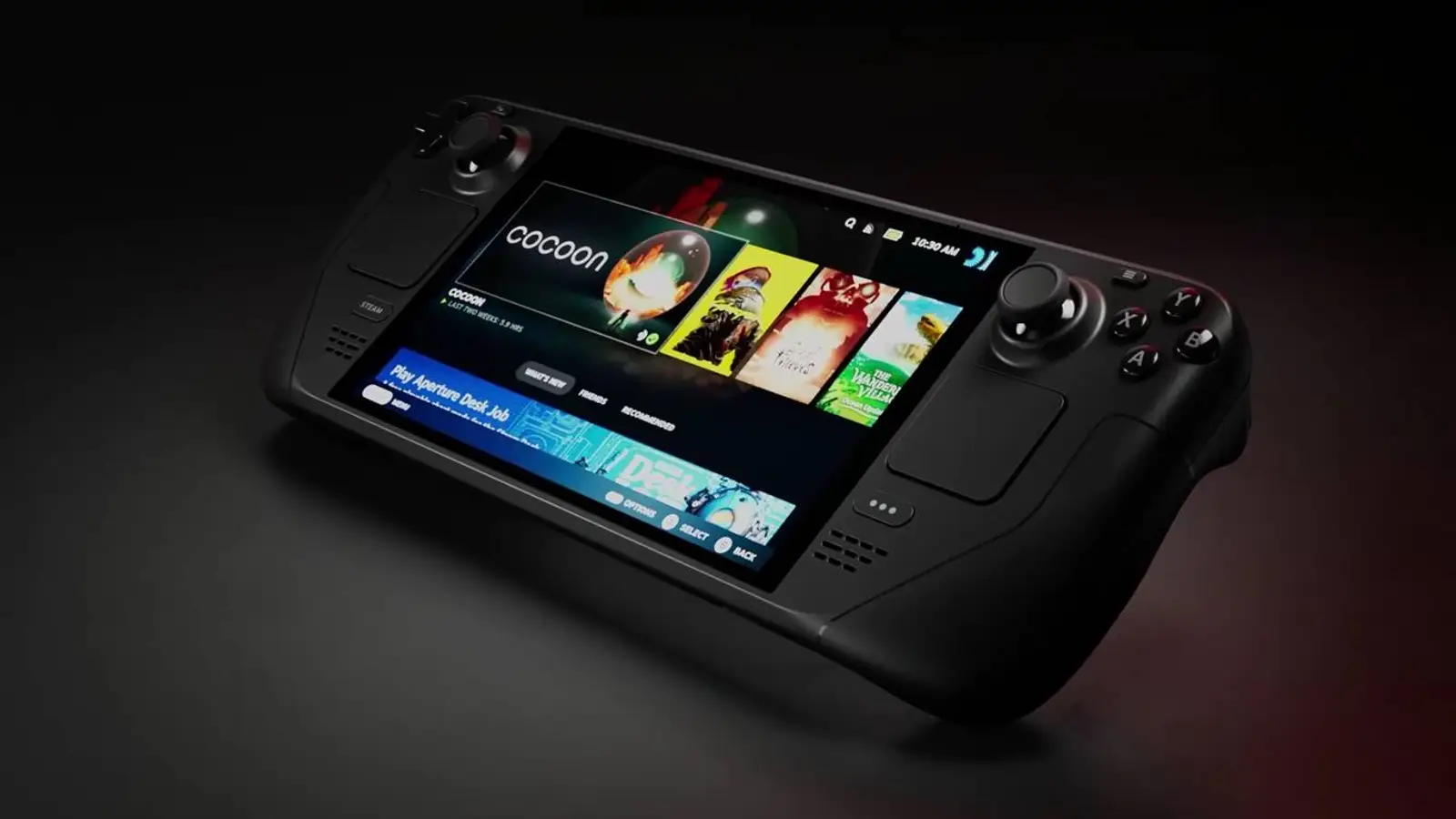
Valve has signaled that an updated Steam Deck isn’t arriving anytime soon, as the company isn’t ready to ship a new generation for a modest power bump. In a recent interview with IGN, Deck platform development head Pierre-Lu Griffe said that a 20–50 percent performance increase would be too little to call the device a true successor. Valve wants a leap that feels like a genuine new version while keeping the same battery life. In other words, the bar is set deliberately high.
Griffe stressed that the team is guided by meaningful technological shifts rather than cosmetic tweaks. He noted that the market currently lacks mobile SoCs capable of delivering the level of performance Valve expects from a Steam Deck 2. That’s why the company isn’t rushing to adopt current chips like the AMD Ryzen Z2: the gains are minimal, and the RDNA2 graphics used in today’s Deck still hold up thanks to ongoing optimizations. It’s a pragmatic stance—there’s little sense in chasing specs for their own sake.
AMD, for its part, is focusing less on raw clocks and frame rates and more on energy efficiency and modern upscaling technologies. While RDNA2 supports ray tracing, it’s a poor fit for newer AI-driven methods and scaling features like FSR 4, which helps explain AMD’s reluctance to push stopgap solutions. Analysts suggest the next Deck could move to an RDNA5 architecture, but that would naturally require a longer wait—migrating to such platforms takes time.
Valve clearly isn’t trying to match Nintendo or Sony on release cadence. The Switch held its ground for years on the strength of smart optimization rather than brute-force power, and Steam Deck is following a similar playbook: steady sales have already topped 10 million units, giving the company room to proceed without hurry. The next Steam Deck will arrive only when performance truly matches the idea of “next-gen,” not just an incremental bump of a few dozen percent. That expectation draws a clear line in the sand.