

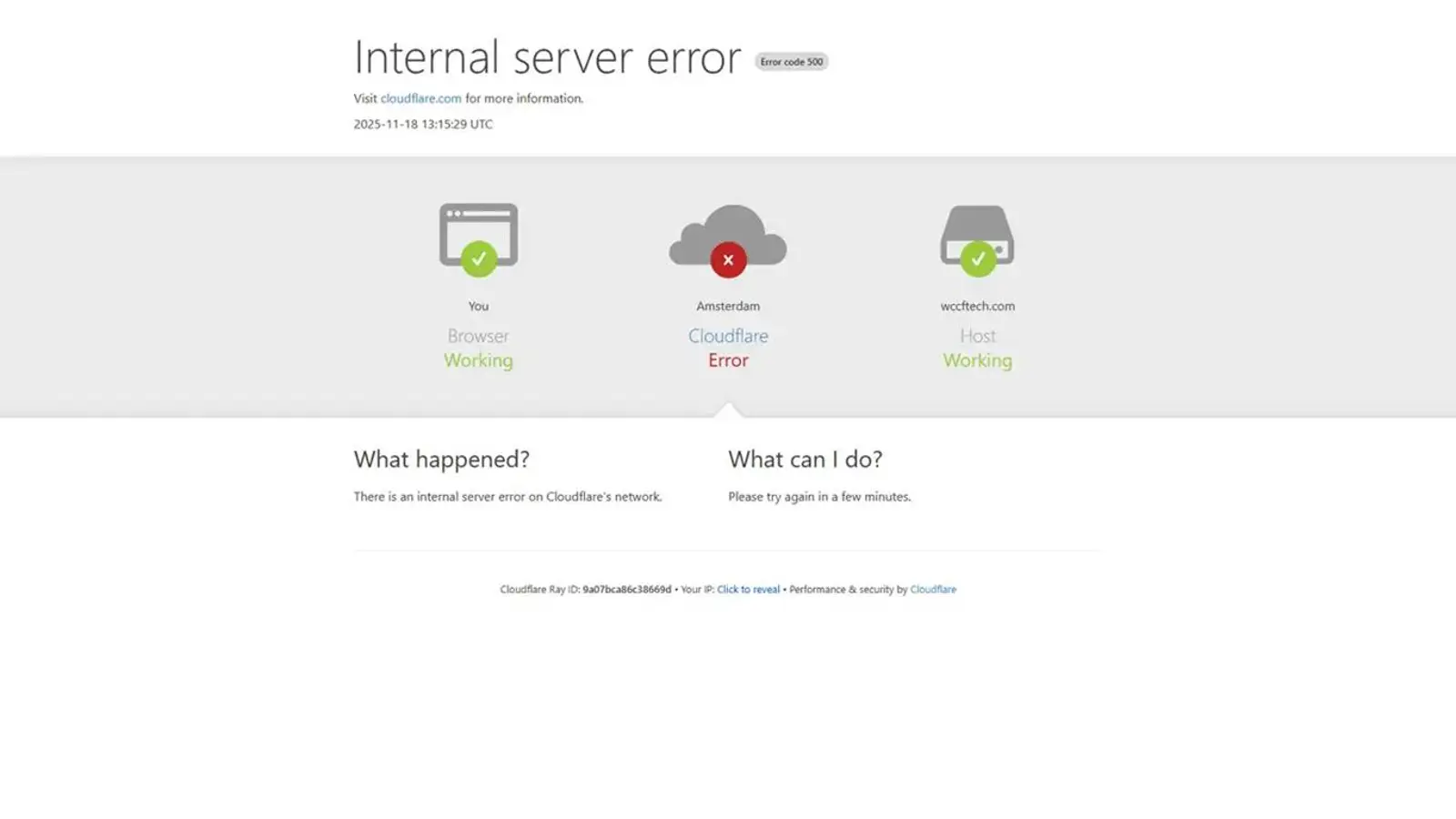
On November 18, a sweeping internet outage turned out to stem from a single improperly formed file on Cloudflare’s servers. When its size unexpectedly doubled, it set off a chain of technical failures and knocked offline several major web services, including X, OpenAI, and even some McDonald’s divisions. Cloudflare issued a formal apology, and cofounder Matthew Prince said in a blog post that engineers initially suspected a cyberattack—especially since Microsoft reported a major DDoS assault that same day—but the cause later proved to be a configuration error. The fact that one file could trigger so much disruption says a lot about how tightly coupled modern infrastructure has become.
Prince explained that the incident was not caused, directly or indirectly, by a cyberattack or any malicious activity. It arose from a change to access permissions in one of the company’s database systems, which led the database to output multiple entries into the “functions file” used by Cloudflare’s bot-management system. That file, as a result, doubled in size and was then pushed to all machines across the network.
The file was uploaded at 11:05 UTC, but the first failures did not appear until 23 minutes later. As it propagated, the error spread across the network and peaked around 13:00. Engineers identified and corrected the issue at 14:30, and by 17:06 UTC services had returned to normal. The timeline hints at how fast configuration changes can ripple outward—yet take hours to fully unwind.