

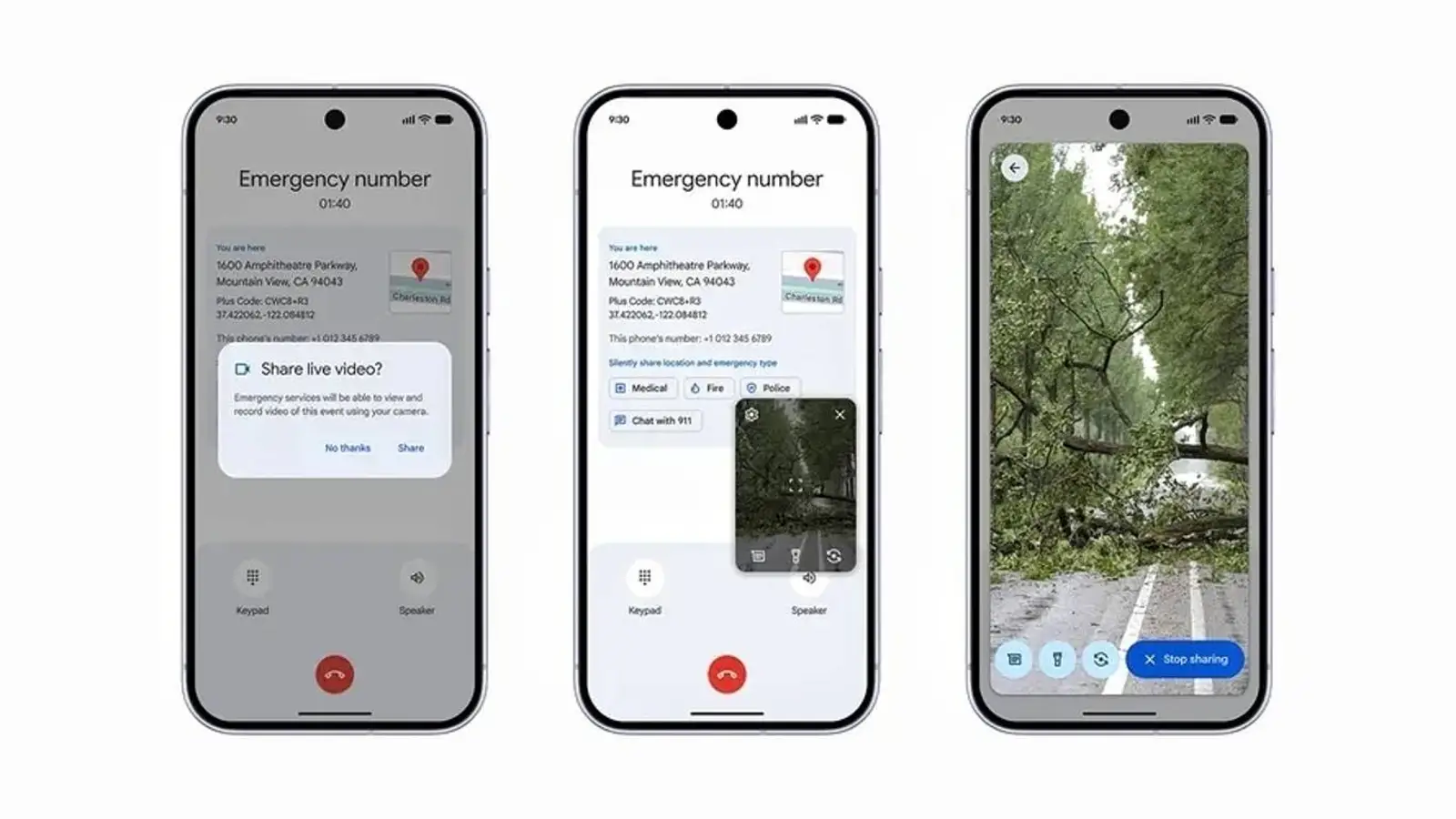
In emergencies, every detail matters—and how clearly you can describe what’s happening can determine how fast and how effectively help arrives. Stress often scrambles words. To cut through that, Google is bringing a new tool to Android: emergency real-time video streaming.
Now, when you call or text an emergency service, a dispatcher can send a request to enable a live video feed. With a single tap, your phone starts a secure broadcast from its camera. That gives specialists an immediate view of the scene—whether it’s identifying the nature of injuries after a crash, gauging how serious someone’s condition is, or sizing up a fire before responders get there. In some situations, dispatchers can even coach you through vital actions remotely, including helping you perform CPR.
The feature requires no setup and appears only when it’s truly needed. If the dispatcher decides video would help, a prompt will show up on your screen. You choose whether to allow the stream. The feed is protected, fully encrypted, and you can stop it instantly at any time.
The new capability builds on Android’s emergency safety ecosystem: location sharing during calls, fall detection, and satellite SOS. It’s available in the United States and in select regions of Germany and Mexico, and it works on devices running Android 8 or newer. Google plans to expand availability, and documentation is already open to agencies interested in adopting the technology—a practical step that could make a small change with outsized impact when seconds count.