
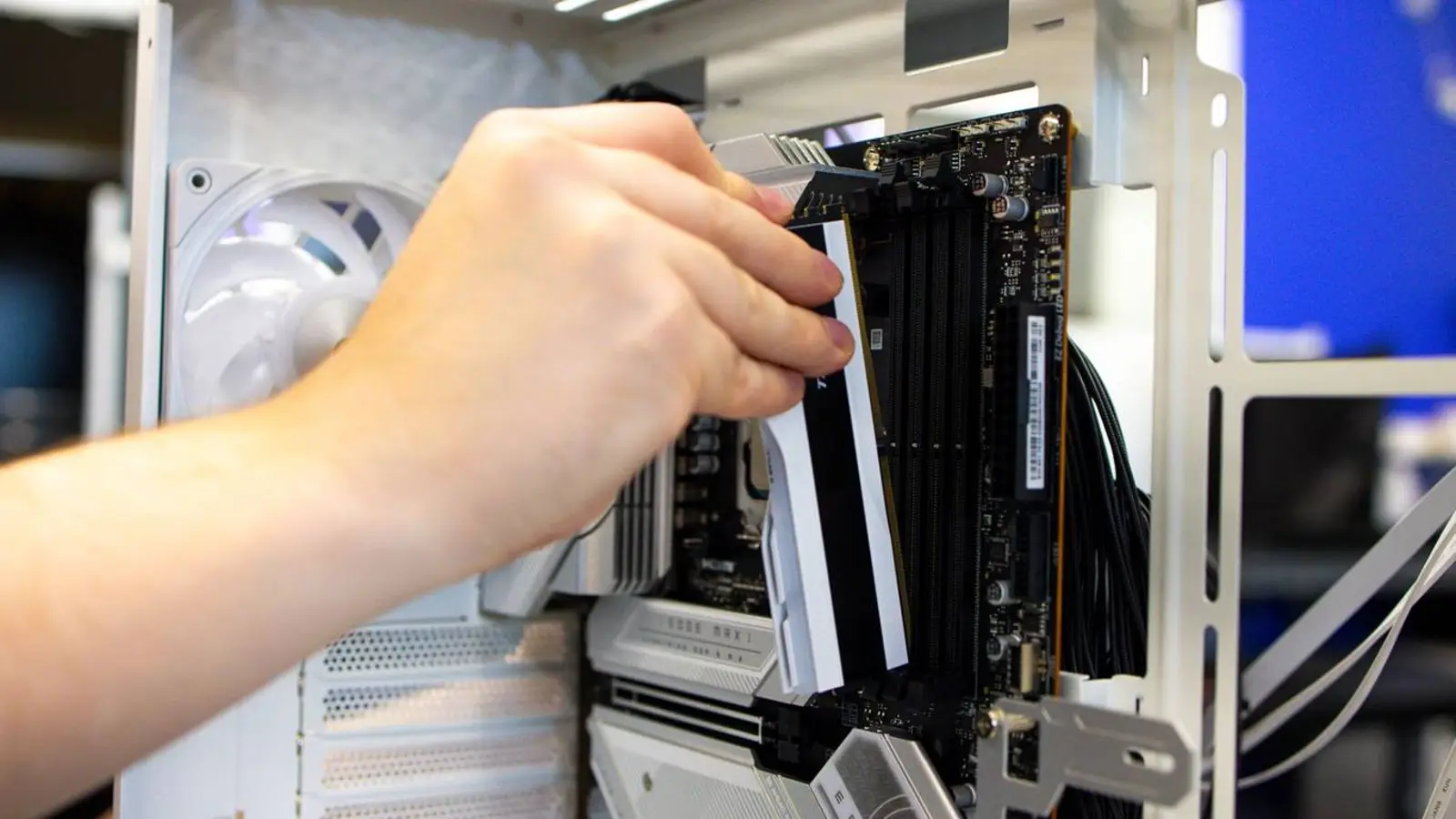
Rising DDR5 prices are pushing some PC builders to look for unconventional fixes. With demand from AI servers and data centers running hot—and analysts expecting that to continue through 2027—upgrading an ordinary desktop is steadily slipping out of reach.
In response, a wave of enthusiasts has started assembling DDR5 modules on their own. The concept isn’t brand-new: modders have long experimented with video memory by swapping chips on graphics cards. Now the same playbook is being applied to system RAM, using blank DDR5 PCBs, individual memory ICs, and hand-built modules.
According to Pro Hi-Tech, the necessary components are easier to source than many would think. Chinese manufacturers offer ready-to-use DDR5 boards, which lowers the barrier to entry. The sticking points are elsewhere: soldering the chips with precision and then validating that the module runs stably.
The cost of parts for a DIY 16 GB DDR5 module is estimated at about $150, clearly undercutting branded kits. For context, a retail 16 GB DDR5 stick at 5600 MHz can hover around $190, and ordering components in bulk could widen that price gap.
Of course, this path isn’t for everyone. It calls for experience, specialized tools, and a willingness to accept risk—from potential instability to the lack of any warranty. Still, the growing interest in DIY memory says a lot: users are tired of high prices and persistent DDR5 shortages. It’s unlikely to overturn the market overnight, but it does send a pointed message—and whether the trend spreads will depend on how long the squeeze lasts.