
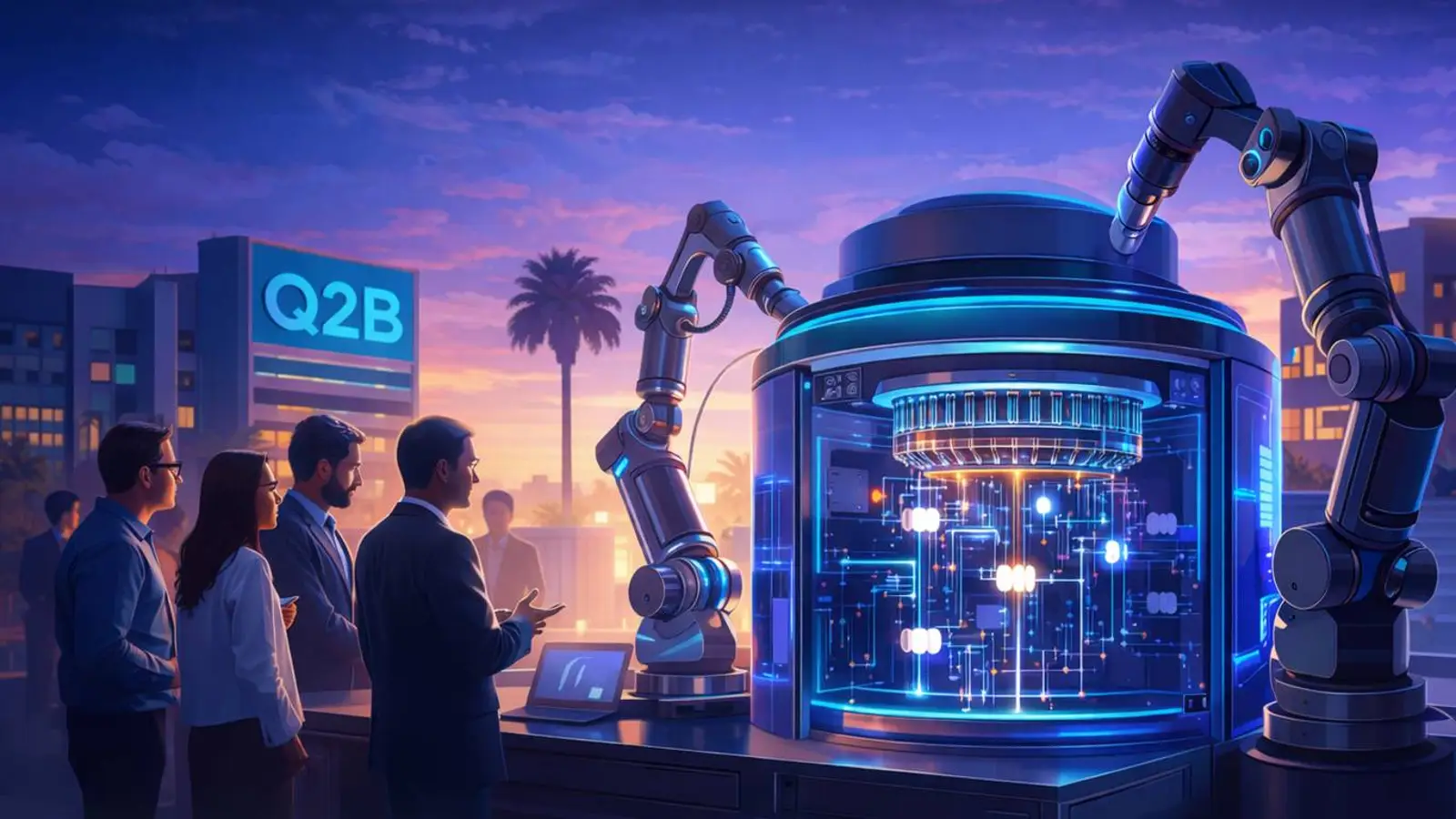
At the end of 2025, Silicon Valley hosted the Q2B conference, dedicated to the future of quantum computing and how it might be put to work in the real world. The mood in the halls leaned toward tempered optimism: the field has made visible progress, yet a truly useful and stable quantum computer still sits on the horizon. For now, these machines remain intricate experimental rigs rather than tools for everyday workloads.
As the outlet BODA.SU notes, quantum computers differ fundamentally from traditional ones. They exploit quantum-physics effects that, in theory, let them solve certain problems faster than classical supercomputers. In practice, though, qubits are exceedingly fragile and prone to errors from the slightest disturbance. That’s why today’s quantum devices are best suited to research, trials, and capability demos—not long, reliable computations.
Part of Q2B’s draw is its focus on practicality: not abstract theory, but when these machines become truly worthwhile. DARPA’s Joe Altepeter said the chance of seeing a system useful to industry looks higher now than it did a few years ago. That carries weight, since DARPA bases its assessments on independent validations rather than corporate promises.
Events in 2025 added to the cautious momentum. Google, Microsoft, and Quantinuum showcased results that are difficult to reproduce with classical methods, even if only in narrow scenarios. That doesn’t signal an imminent breakthrough, but it does suggest quantum computers are beginning to display properties you won’t find in conventional hardware. Still, the hardest problems—errors, scaling, and cost—haven’t gone anywhere.
For everyday users, the upshot is simple: quantum computers won’t replace familiar devices or show up at home anytime soon. Yet Q2B underscored an important shift: the field is increasingly framed as an engineering and economic endeavor rather than pure science. If the current pace holds, the early 2030s should reveal which path actually leads to a “useful” quantum computer. That reframing alone hints at a technology edging out of the lab and into the realm of deliverables and trade-offs—a quieter kind of progress, but progress all the same.