
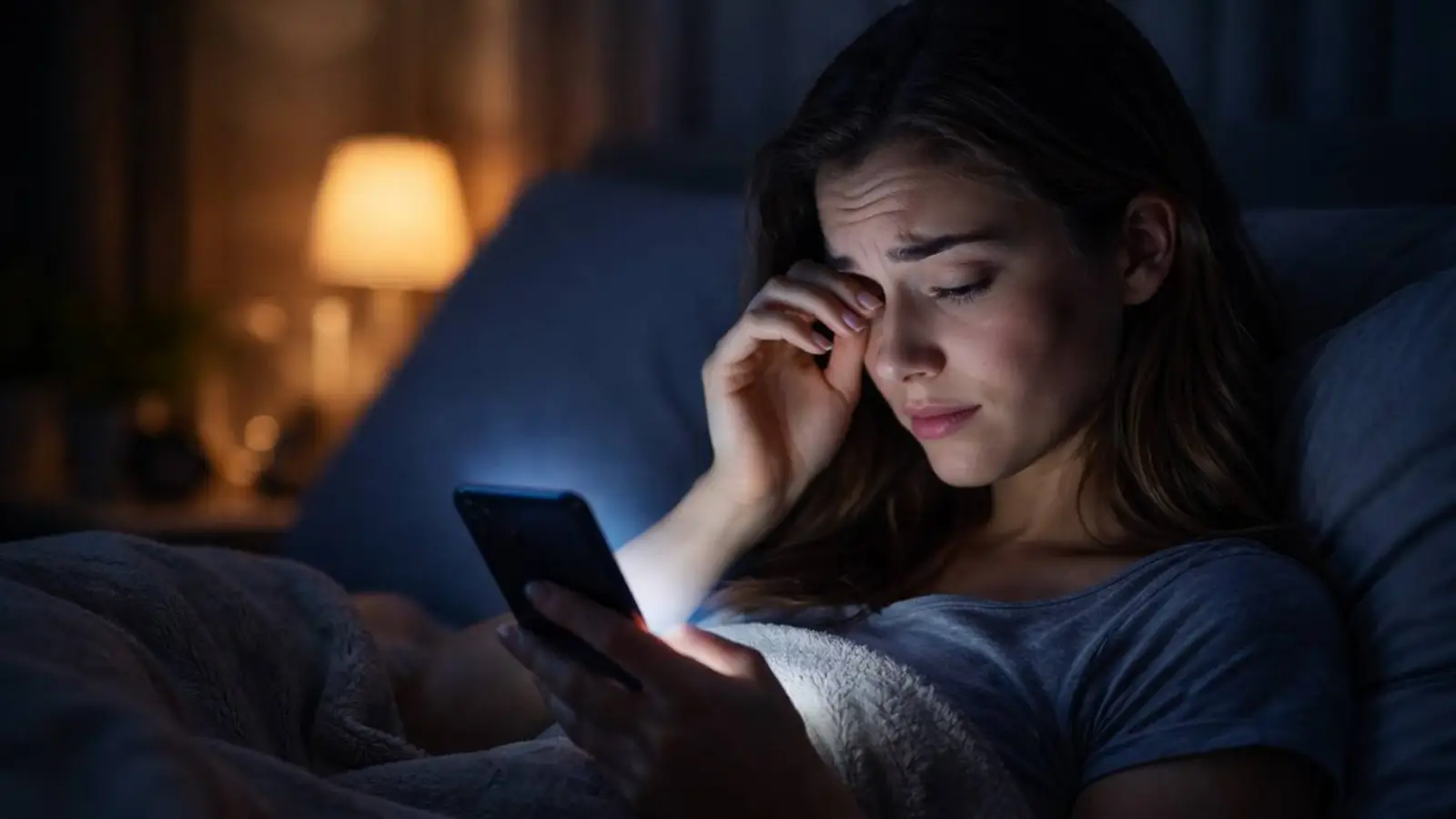
Scrolling through your feed in the dark before bed might seem harmless. Many people do it every night without thinking about the consequences. But regularly using a smartphone in complete darkness can gradually, yet seriously, affect your health—from vision and sleep to overall well-being and concentration. The problem is that the harm accumulates unnoticed and doesn't show up right away.
Eye Strain and Vision Deterioration
Looking at a bright screen in a dark room forces your eyes to work in unnatural conditions. The sharp contrast between the glowing display and the surrounding darkness makes focusing harder. Eye muscles become strained, leading over time to dryness, burning, pain in the eyes, and discomfort above the eyebrows.
Another issue is that people blink less when staring at a screen. This reduces eye moisture, causing faster fatigue, an effect that worsens in the dark. Some experience temporary blurred vision after prolonged nighttime smartphone use. While it may fade, repeating this strain regularly increases the risk of long-term vision problems.
Children and teenagers are especially vulnerable. Their visual systems are still developing, and constant phone use in the dark can negatively impact vision growth. But adults aren't immune either if this habit persists for years.
Sleep Disruption and Increased Stress
Using a smartphone in the dark directly interferes with natural biological rhythms. The screen's light, even if it doesn't seem too bright, signals the brain that it's not yet time to sleep. This slows melatonin production—the sleep hormone—and prevents the body from relaxing.
Many pick up their phone in bed thinking they'll just check it for a minute, but end up spending much more time scrolling through feeds or messaging apps. Sleep gets delayed, and its duration shortens. Lack of sleep affects mood, attention, and immunity, making people more irritable and tired.
Over time, this pattern raises stress levels. The body doesn't have enough time to recover, which can impact heart function, metabolism, and emotional state. Additionally, the internal "clock" gets disrupted: it becomes hard to fall asleep early even on days when it's necessary, negatively affecting studies and work.
Neck and Head Pain, and Reduced Concentration
Using a phone in the dark almost always involves poor posture. The head is tilted down, the neck stays tense for long periods, and back muscles don't relax. Over time, this can lead to chronic pain in the neck and upper back, which might start as minor but gradually intensifies.
Nighttime scrolling also hinders mental relaxation. Rapidly changing images, notifications, and bright light keep the brain active when it should be winding down. As a result, it becomes harder to focus the next day, tasks require more effort, and fatigue lingers even after sleep.
Additionally, eye strain in the dark can trigger headaches. Combined with poor sleep, this noticeably affects overall quality of life and emotional well-being.
Hidden Risks and How to Reduce Harm
There are less obvious issues too. In the dark, it's easier to drop your phone, leading to broken screens and extra costs. Also, without visual cues, you lose track of time—you might not notice an hour or two passing, stealing it from sleep. The impact on mental health can't be ignored. Late at night, people are more likely to encounter anxious news or negative content, which increases pre-sleep anxiety. A calm state is key to quality rest.
If giving up nighttime phone use isn't possible, at least try turning on soft lighting, lowering screen brightness, and taking breaks to blink more often. It helps to set a "phone-free time" before bed. Even better—put the smartphone away when the lights go out, giving your eyes and brain a chance to rest.
Your phone is a convenient tool, but it shouldn't be with you every minute. Avoiding smartphone use in the dark is a simple step that helps preserve vision, improve sleep, and make you feel more energetic each day.