
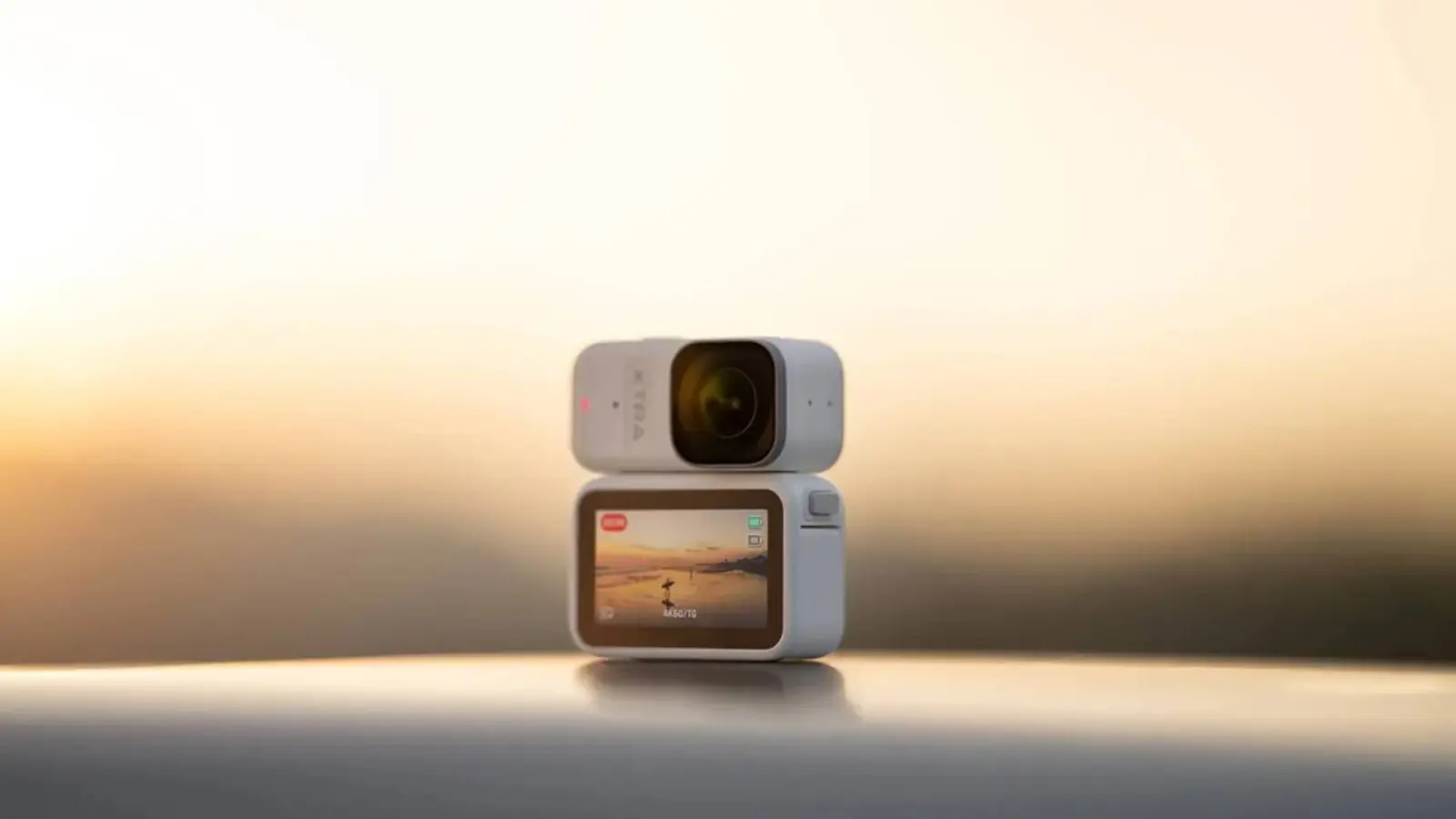
Xtra is entering the wearable camera market with an unusual new product aimed not at extreme sports, but at everyday content creators. The Xtra Atto, a miniature action camera recording in 4K, will go on sale on January 29, 2026. Weighing just 54 grams and priced at $299, the company is betting that the device will be almost unnoticeable in daily life, allowing users to capture spontaneous moments without preparation or bulky equipment.
Founded in the U.S. by a team of specialists from major tech companies, Xtra is already known for creator products like Muse, Sphra360, and Edge Pro. The Atto continues this line by offering an extremely compact format: the camera can be attached to a cap brim, belt, bicycle, or pet harness, or placed in tight spaces where a smartphone or standard action camera would be inconvenient.
Despite its size, it houses a large 1/1.3-inch sensor for its class, capable of recording 4K video at 60 frames per second. The camera features a 143-degree wide-angle lens, ideal for point-of-view filming during walks, travel, cycling, and daily vlogging. The body is waterproof to depths of up to 10 meters without an additional housing, and for smooth footage, it includes two stabilization modes: MotionMaster and TiltGuard.
The device comes with 128 GB of built-in storage, so users can start recording right after purchase. For extended scenarios, Xtra offers the Vision Dock accessory, which serves as a charging module, control block, and hub for microSD cards up to 1 TB. The camera runs for about 90 minutes, but with the dock, total recording time increases to roughly 220 minutes, transforming the Atto from a "pocket gadget" into a full-fledged tool for all-day shooting.
Other features include pre-recording, head-gesture activation, and touch control, which are handy when your hands are busy. Support for Wi-Fi 6 and USB 3.1 ensures fast file transfers. Overall, the Atto concept suggests that the future of cameras for bloggers may lie not in increasing size and screens, but in devices that literally blend into everyday life.