
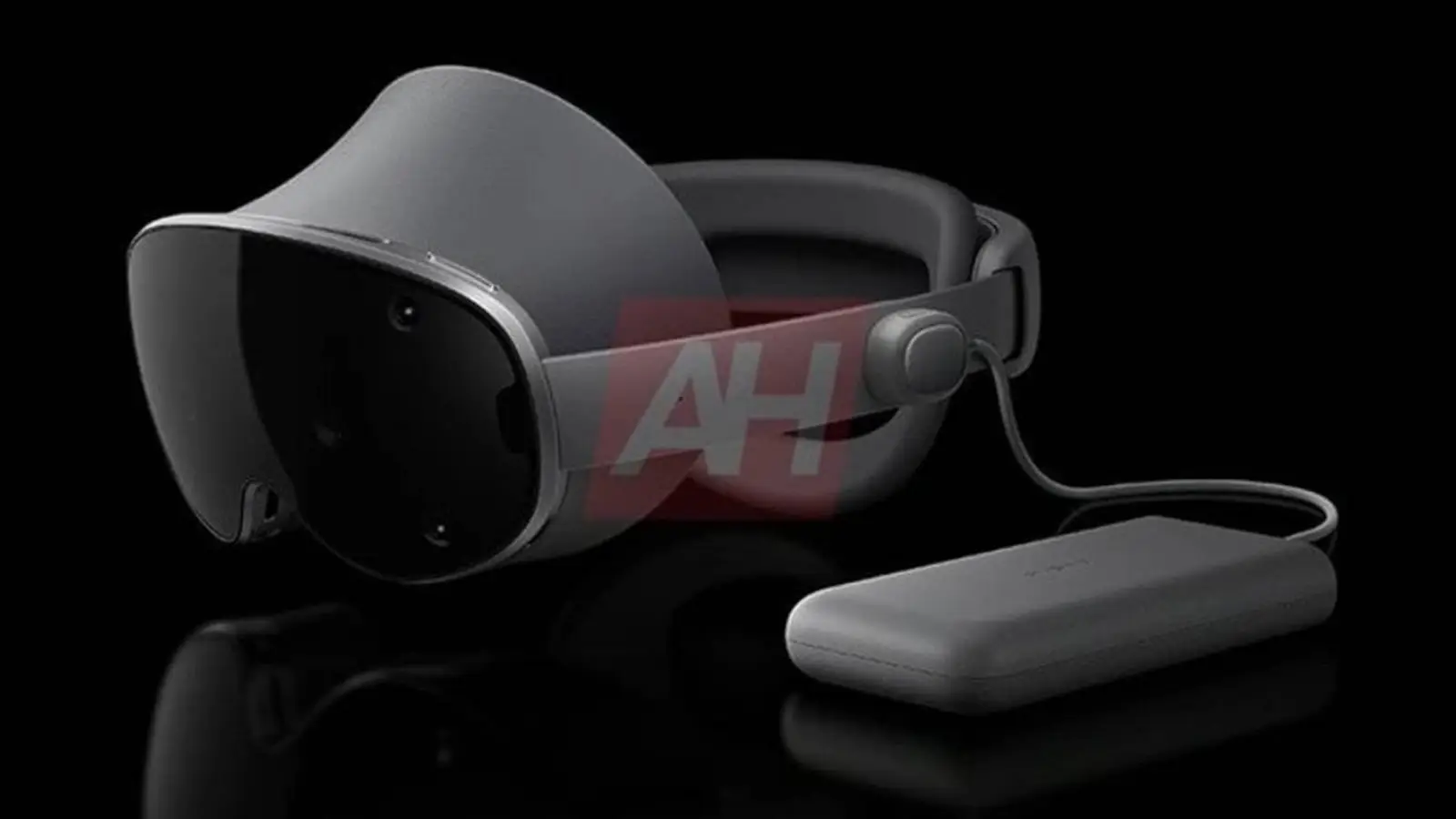
Samsung is gearing up to launch its own XR headset, and a major leak has laid out almost everything—from how it looks to the key specs. Previously known as Project Moohan, the device is set to arrive as Samsung Galaxy XR and takes a clear cue from Apple’s Vision Pro. It adopts a sleek, close-fitting shell and an external battery pack reminiscent of Apple’s approach.
The front panel carries an array of cameras and sensors: four under-glass units handle hand tracking, while two round modules near the bridge of the nose watch the lower field of view. A forehead proximity sensor helps account for nearby walls. Inside, eye-tracking cameras work in tandem with IR LEDs and AI to capture pupil movement with precision.
The headset uses two 4K micro-LED displays at 4,032 ppi, for roughly 29 million pixels combined. Power comes from a Snapdragon XR2+ Gen 2 chip, jointly optimized by Samsung, Qualcomm, and Google for mixed-reality tasks. Built-in microphones offer noise reduction and speech enhancement, with speakers integrated into the headband. For input, there’s a side touchpad, buttons for launching the interface and adjusting volume, plus support for controllers with six degrees of freedom, analog sticks, and haptics.
Galaxy XR will support the Google Play Store and ship with a proprietary interface styled to the Galaxy ecosystem. The leak also cites battery life of up to 2.5 hours for video playback and around 2 hours of mixed use.
Taken together, Samsung is positioning itself as a serious rival to Apple, pitching an XR device built around Android integration and its own services. On paper, the blend of high-density displays and a dense sensor suite reads as ambitious, pointing to sharp visuals and responsive tracking if the final product matches the leak.